
Download the PDF: CTNA ACPF Release June 10 2026_Final
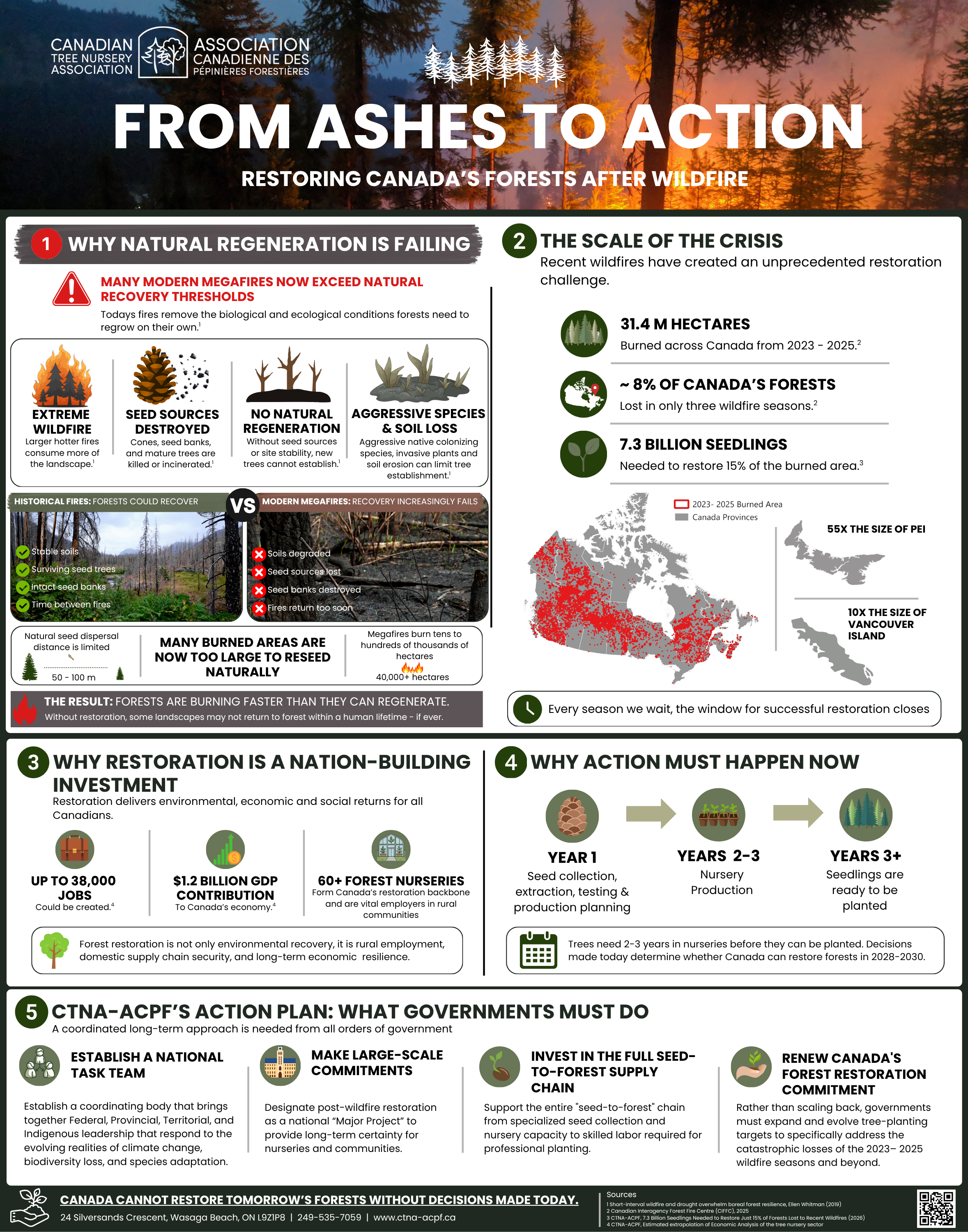
Can Forests Survive Today's Wildfires? New Poster Debunks the Self-Regeneration Myth
Wasaga Beach ON. June 10, 2026: The assumption that Canada's forests naturally bounce back after a wildfire needs a reality check. The Canadian Tree Nursery Association–Association Canadienne des Pépinières Forestières (CTNA-ACPF) released an infographic revealing the sobering reality: intensifying "mega-fires" are destroying natural seedbanks, rendering forest regeneration unpredictable or entirely nonexistent.
The poster also contextualizes that it will take 7.3 billion seedlings to restore just 15% of the Canadian forests destroyed by wildfires between 2023 and 2025.
"We face a significant and increasing biological dilemma," says Doug Hevenor, Executive Director of the CTNA-ACPF. "Too many people see a burnt landscape and assume Mother Nature will take care of it. But frequent modern mega-fires are killing the seed and seed trees that would normally regenerate the forest. Nature can no longer keep up without human intervention."
The infographic www.ctna-acpf.ca/resources/regeneration also illustrates environmental bottlenecks halting natural recovery:
Extreme wildfire intensity is destroying seed sources — larger, hotter fires are killing mature seed trees, cones, and natural seed banks needed for forest recovery.
Many burned areas are now too large to reseed naturally — natural seed dispersal is limited, while modern megafires can burn hundreds of thousands of hectares beyond the reach of surviving seed sources.
Invasive species and degraded soils are preventing recovery — soil damage, invasive plants, and poor site conditions make it difficult for new trees to establish after fire.
The CTNA-ACPF warns that relying on outdated assumptions about natural regeneration to justify forest management funding cuts will result in permanent loss of public forests, devastating Canada's carbon-capture targets, biodiversity, and future wood supply. The Association is calling on governments to establish a stable, long-term National Post-Wildfire Forest Restoration Program while reminding Canadians that their members are ready to grow this nation’s future forests.”
–30–
Media Contacts
CTNA-ACPF: Doug Hevenor, Executive Director, CTNA-ACPF, Cell: 249-535-7059, Email: dhevenor@ctna-acpf.ca
To schedule English or French interviews: Don Huff, Cell: (416) 805-7720, Email: dhuff@ctna-acpf.ca
Additional information about the Canadian Tree Nursery Association-Association Canadienne des Pépinières Forestières (www.ctna-acpf.ca)
The Canadian Tree Nursery Association–Association Canadienne des Pépinières Forestières represents 66 nurseries across Canada, producing more than 95% of the nation’s forest restoration seedlings— over 720 million annually. Formed in 2023, it is the sole national voice for Canada’s forest nursery sector. According to The Economic Value of Canada’s Tree Nursery Sector report, the sector generates $256.3 million in annual revenue, contributes $535.4 million to Canada’s GDP, and supports 4,378 full-time equivalent jobs, primarily in rural communities. As wildfire impacts intensify, these figures underscore the critical role tree nurseries play in forest restoration, ecological sustainability, and rural economic resilience.
Directors: Ryan Scott, Scott and Steward Forestry Consultants Ltd. Mike Downing, L’office des producteurs de plants forestiers du Québec (OPPFQ), Brent Forbes, Somerville Nurseries Inc., Scott Formaniuk, Coast to Coast Reforestation Inc. Renee Yardley, CCO, PRT Growing Services Ltd.
Sponsors: Harnois Greenhouses - Lumineux de nature | Brighter by design, Lambert Peat Moss